
Do you have an attitude of gratitude? And do you know the benefits and importance of having one?
Firstly, let’s look at what gratitude actually is, because like many things, we don’t sometimes stop and think what these things are, and that can limit our capacity to practice it.
Positive Psychology describes gratitude as, ‘an emotion and a state of appreciation for the positive things in life. It involves recognising the goodness we experience and acknowledging that it comes from sources outside ourselves, fostering a sense of thankfulness’.
Gratitude can also be found in Glimmers, which are another way of consciously looking for the good stuff in life.
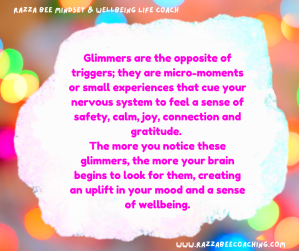
Finding a ‘glimmer’ in your day means intentionally noticing small moments of joy, connection, or positive emotion that can uplift your mood and create a sense of wellbeing. These glimmers can be absolutely anything that makes us smile or feel content; a fabulous sunrise or sunset, a favourite taste or smell, observation of nature, a conversation, connection with a pet, or even just feeling the sun on your skin.
Glimmers are unique to each individual but it is anything that tells your body and brain that you are okay. Everyone will have glimmers in their day, wven when it doesn’t feel like it, but the trick is to train our eyes and minds to see them. It’s not easy but if we can try then we will gain the benefits quite quickly.
By intentionally noticing and appreciating these small momemts of happniness and contentment, you can create a more positive and fulfilling life, because noticing and appreciating them tells your nervous system that you’re safe and can relax. Like gratitude, the more we intentionally notice and appreciate glimmers, the more our minds and bodies will unintentionally notice them until it comes a habit.
Gratitude and glimmers are such an important and integral part of good mental, emotional and physical health, so let’s now look at why that is.
Feeling and expressing gratitude and observing glimmers have been clinically proven raise endorphin levels, which in turn reduces feelings of stress, anxiety and depression. Expressing gratitude is clinically proven to improve sleep, immune function, productivity and relationships.
Some studies even show that practicing gratitude improves wellbeing by the same amount (around 10%) as doubling income, and those that practice gratitude also tend to exercise more, which has a direct positive impact on both physical and mental health.
So, how can we get better at gratitude? Well, the simple answer is, practice makes perfect.
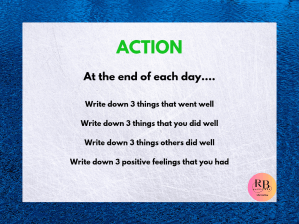
Most days for the past few years, in the hardest of times and in the best of times, I have reflected on 3 things that have gone well in the day, 3 things I am grateful for, and 3 things I am good at.
One of the cards in my wellbeing resource, ‘Coach in My Pocket’ encourages us to do this, and it’s one of the top 5 cards people like in the deck. It’s such a simple task, and literally takes less than 10 minutes to do, but the impact can be profound, life changing and long lasting. Gratitude can literally change our brain and outlook on life.
If you make gratitude a habit, you will find happiness, fulfillment, health, and contentment easier to achieve. It’s not a fix all, obviously, but it really does help.
Next week is the 3rd anniversary of my Mum’s death, and I can honestly say this 3rd year has been the toughest of them yet. Finding my glimmers and having an attitude of gratitude hasn’t been easy at times, but I have learned that expressing gratitude can and does have an instant positive impact on our perceptions, motivation, emotions and mental health.
Expressing gratitude is something that I also encourage those I work with to do too, and people are amazed by how impactful this simple task is. We have to be careful not to be toxically positive because that’s not at all healthy, but to be swimming around in a quagmire of dullness and pain without any glimmers is also toxic and unhealthy.
I discuss the topic of Toxic Positivity in another blog piece, which can be found here
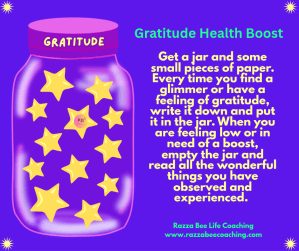
Task: Look back over the past few days, weeks and months and think about what you are grateful for. Even in the darkest and most challenging of times there will be something good and glimmering. You might want to use this jar as a tool, or make a list, or leave yourself a voice note; whatever works for you.
If you’d value some support and guidance in navigating and managing your emotions and finding your way to a life of gratitude and glimmers, please feel free to contact me on 07523830377 or email razzabeecoaching@gmail.com. You can also check out my website at one www.razzabeecoaching.com
 Razza Bee Life Coaching